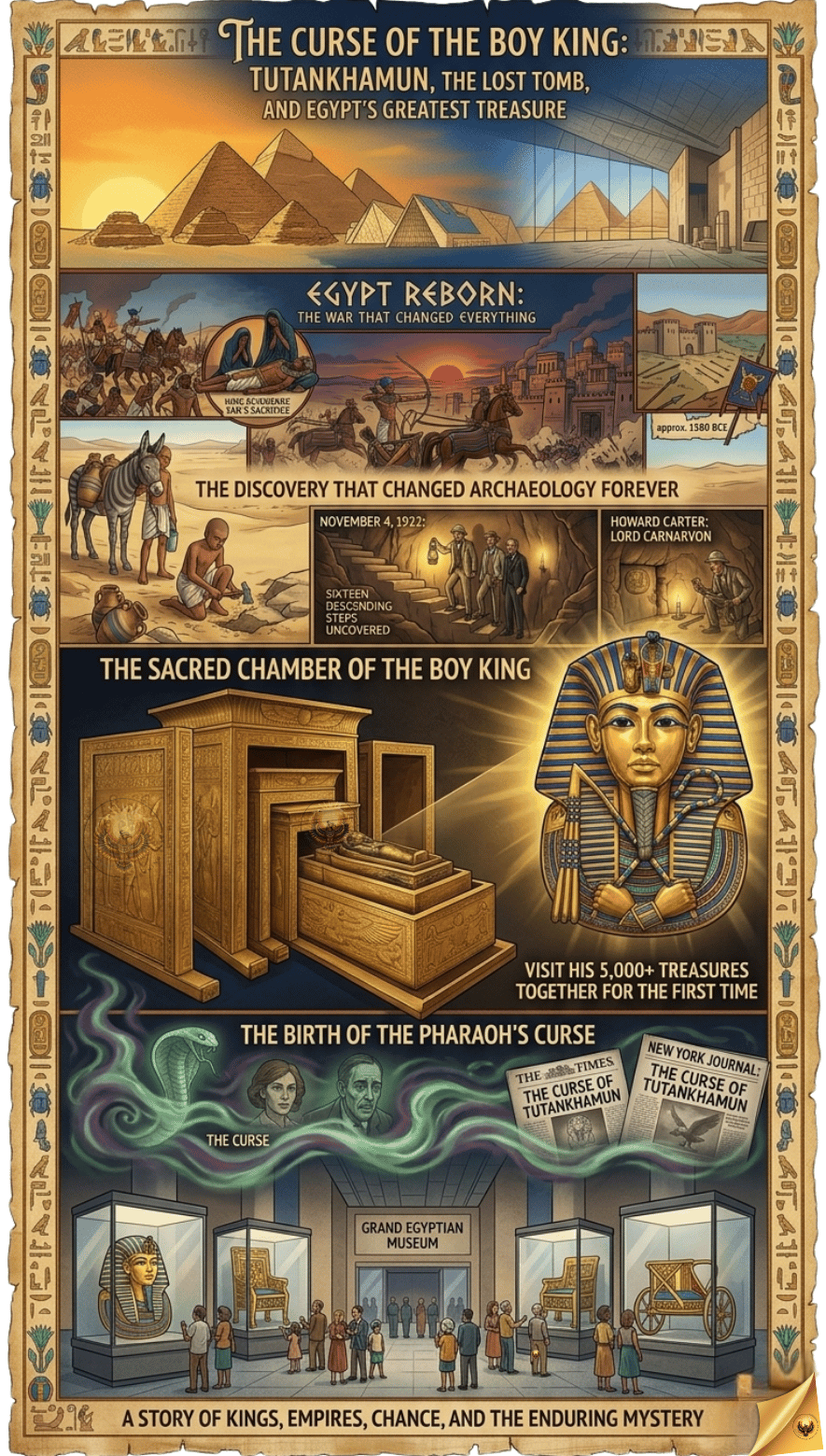
Near one of the world’s most iconic monuments-the Great Pyramid of Khufu at Giza-Egypt is unveiling a cultural giant: the Grand Egyptian Museum.
This extraordinary complex is not just another museum. It is the largest archaeological museum in the world, designed to hold nearly 100,000 artifacts spanning almost seven thousand years of Egyptian civilization. From the earliest pre-dynastic cultures to the Greek and Roman periods, it tells the story of one of humanity’s greatest civilizations.
But the true star of the museum is a king who ruled briefly, died young, and yet became the most famous pharaoh in history.
For the first time ever, the entire funerary collection of Tutankhamun will be displayed together in one place. Visitors will stand before his dazzling golden death mask, his royal throne, his chariots, and hundreds of treasures once buried with him more than 3,000 years ago.
And with these treasures comes one of history’s most famous legends:
The Curse of the Boy King.
Egypt Reborn: The War That Changed Everything
Long before Tutankhamun lived, Egypt faced a crisis that nearly destroyed the kingdom.
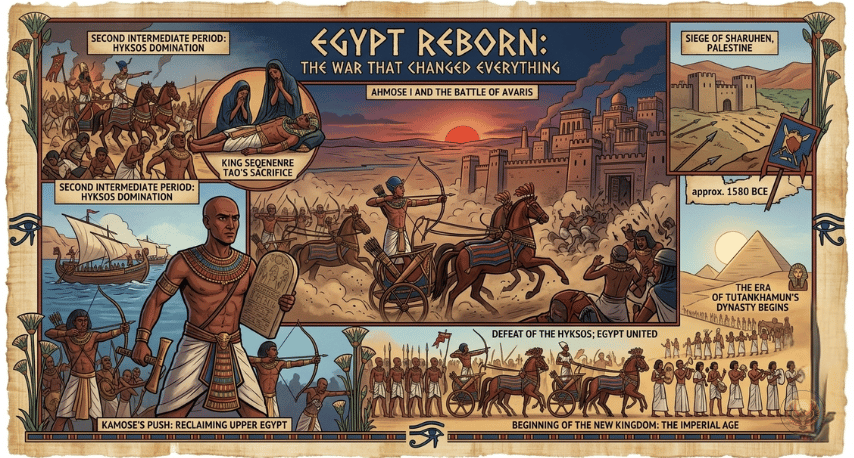
During a chaotic era known as the Second Intermediate Period, foreign rulers called the Hyksos seized control of large parts of Egypt.
The struggle to drive them out would change Egyptian history forever.
The war began with King Seqenenre Tao, who launched the first major attacks against the Hyksos but died violently in battle. His son Kamose continued the fight, pushing the invaders north and reclaiming Upper Egypt.
The final victory came with the young king Ahmose I. At about nineteen years old, he led the Egyptian army using powerful new military technologies such as horse-drawn chariots.
Marching from Thebes, he attacked the Hyksos capital at Avaris and then pursued the remaining forces into Palestine, defeating them at the fortress of Sharuhen around 1580 BCE.
With that victory, the Hyksos vanished from history.
Egypt entered the New Kingdom, its greatest imperial age—and the world into which Tutankhamun’s dynasty would eventually rise.
The Discovery That Changed Archaeology Forever
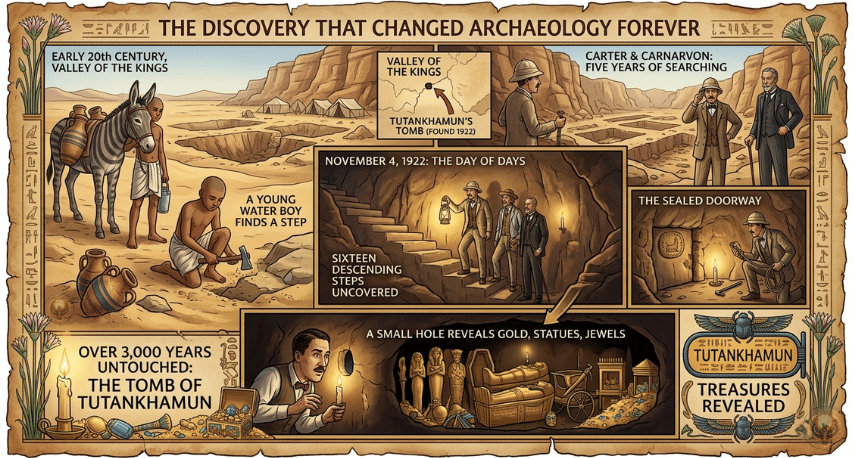
Fast forward thousands of years to the early 20th century in the Valley of the Kings near Luxor.
For years, archaeologists searched the desert for the lost tomb of Tutankhamun.
Among them was the British archaeologist Howard Carter, funded by the wealthy nobleman George Herbert, 5th Earl of Carnarvon.
After five frustrating years of excavation, Carter had found nothing. Carnarvon was ready to stop funding the search.
Then, something unexpected happened.
A young water boy from the Abdel Rassoul family was delivering jars of water by donkey across the valley. When he set one jar down to adjust a rope, it struck something solid under the sand.
Curious, he scraped away the dust with a small axe.
Beneath the sand appeared the top step of a staircase carved into the rock.
The boy ran to tell Carter.
On November 4, 1922, Carter and his team uncovered sixteen descending steps leading to a sealed doorway.
When Carter finally made a small hole and looked inside with a candle, he later described the moment as “the day of days.”
The flickering light revealed something incredible.
Gold.
Statues.
Jewels.
Chariots.
Treasures piled everywhere.
After more than 3,000 years, the tomb of Tutankhamun had been found almost completely untouched.
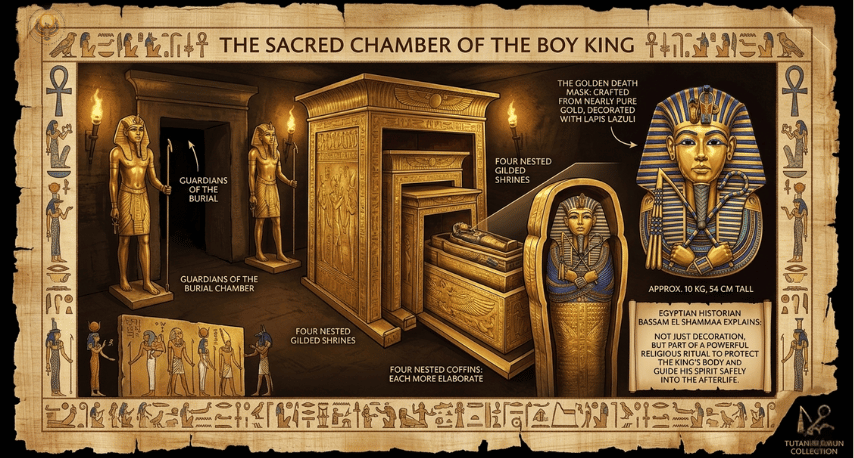
The Boy King Who Became Immortal
Despite his fame, Tutankhamun was not a powerful ruler.
He became pharaoh at about nine years old and ruled only until he was around eighteen or nineteen.
Compared to legendary rulers like Thutmose III or Ramesses II, his political achievements were relatively minor.
In fact, before the discovery of his tomb, historians knew very little about him.
It was not his reign that made him famous.
It was his tomb.
The Birth of the Pharaoh’s Curse
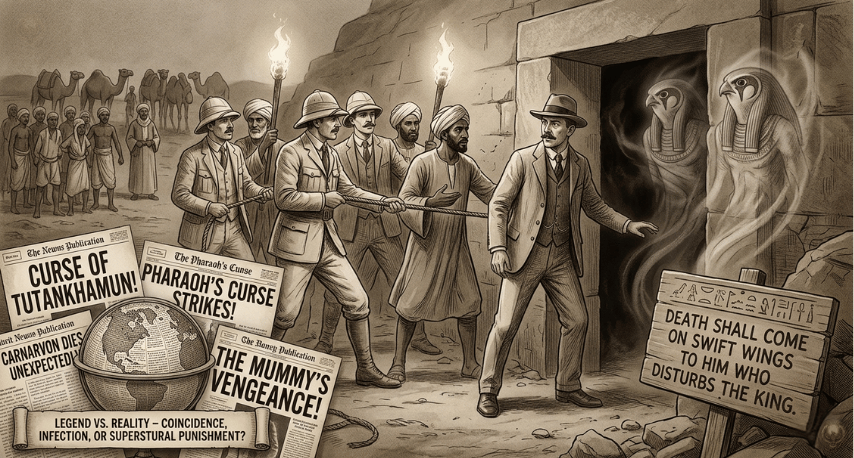
When the tomb was opened, strange stories quickly began to circulate.
Several people connected to the discovery died within a few years—including Lord Carnarvon.
Newspapers around the world began to speak of “The Curse of Tutankhamun.”
Some claimed the tomb carried an ancient warning:
Death shall come on swift wings to him who disturbs the king.
In reality, historians and scientists believe these stories were likely coincidence, infection, or media exaggeration, not supernatural punishment.
Yet the legend grew stronger.
And the idea of a Pharaoh’s Curse captured the imagination of the entire world.
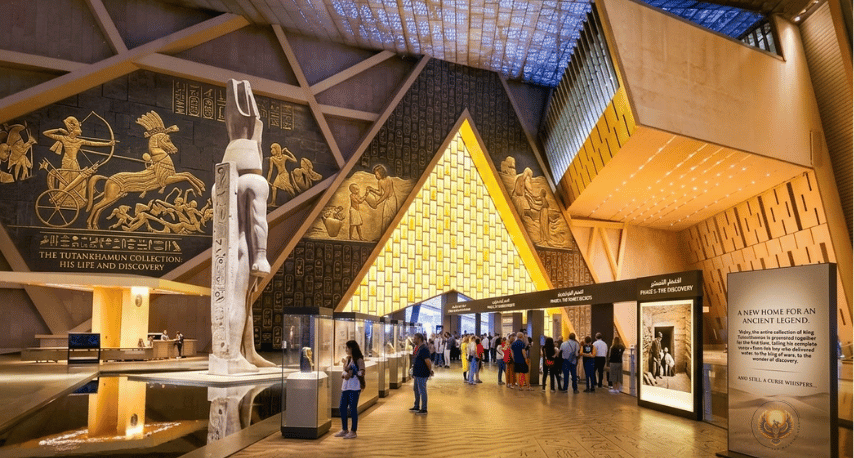
A New Home for an Ancient Legend
Today, the treasures of Tutankhamun are moving into the Grand Egyptian Museum near the Great Pyramid of Khufu.
For the first time in history, visitors will see the entire collection together, arranged to recreate the story of the tomb.
From ancient wars against the Hyksos…
To a boy delivering water in the desert…
To one of the greatest archaeological discoveries ever made.
The story of Tutankhamun reminds us that history is shaped not only by kings and empires-but also by chance, curiosity, and the enduring mystery of the past.
And somewhere in that story, the legend of the Boy King’s Curse still whispers through the sands of Egypt.